
I didn’t expect that.
Earlier this week I posted something a little uncomfortable to admit: that EAs can be surprisingly territorial with each other. Gatekeeping vendors, guarding contacts, treating a peer like competition.

It was a real observation. I've lived it, and I stand by it.
But the response? Over 1,000 reactions, 110 comments, and the overwhelming majority of them were EAs saying: “that's not me” or “We show up for each other”.
I'll be honest, that hit differently than I expected.
So this week's issue is about what it actually looks like to show up for each other, especially when you're working alongside other EAs.
Know an EA who shows up for people? Send this their way. This community grows when we share it with the ones who deserve to be in it. 🫶
Why this is actually hard
EAs are structurally isolated. One per executive, rarely on a team, almost never in the rooms where decisions happen. Most of us learned this job by figuring it out alone.
For a lot of EAs, collaboration is the natural instinct. The territorial behavior isn't who we are, it's what years of operating solo can quietly do to us. When your entire professional existence is built around one exec, one calendar, one relationship at a time, protecting that territory starts to feel like self-preservation even when it isn't.
So when you're suddenly on an EA team, or partnering with another EA on a shared exec, or crossing paths with one at an industry event, that muscle memory can kick in before you even realize it's happening.
It's not malice. It's just what survival mode looks like when it outlasts the situation that created it.
The fix isn't pretending the instinct doesn't exist. It's knowing how to work against it.
How 2M+ Professionals Stay Ahead on AI
What’s the secret to staying ahead of the curve in the world of AI? Information.
Luckily, you can join 2,000,000+ early adopters reading The Rundown AI — the free newsletter that makes you smarter on AI with just a 5-minute read per day.
How to actually work well within an EA team
This is underrated as a skill set. Most EA job descriptions don't mention it, most onboarding doesn't cover it, and yet it will make or break your experience in a role faster than almost anything else.
A few things that actually work:
Establish a communication rhythm early. Don't wait until there's a conflict over calendar access or a double-booked exec to figure out how you talk to each other. Get ahead of it. A standing 15-minute sync with your EA counterpart, a shared doc for exec preferences, a simple handoff protocol, these are small infrastructure decisions with a big return.
Be transparent about your exec's priorities. The fastest way to create friction on an EA team is for everyone to operate in silos and then collide in the exec's calendar. Share what you know. Your colleagues can't set good priorities if they're working blind.
Don't compete for visibility. The exec isn't keeping score of who caught the conflict or who booked the better restaurant. The team wins or the team loses, act accordingly.
Give credit out loud. If another EA saved your exec's day by covering while you were in back-to-back calls, say so. In front of the exec. It costs you nothing and it matters more than you think.
Assume good intent, then ask. EAs are trained to anticipate and read between the lines. That's a great skill for supporting executives and a liability in peer relationships, because we start inferring intent instead of just asking. If something feels off, ask directly.
Empathy is not soft. It's a competitive advantage
No one understands what this job actually costs better than another EA.
Not your exec, not HR, not whoever wrote your job description.
Another EA knows what it's like to have a 7am calendar change ruin your entire week. To be the last one in and the first one out and still feel like you didn't do enough. To be invisible in a meeting you planned every detail of.
When you walk into a conversation with a fellow EA with that awareness, you're not starting from zero, you're starting with fluency.
Use it!

Be the EA who gives a real, honest reference instead of a vague non-answer.
Be the one who shares the vendor contact.
Be the one who says "here's what I wish I'd known in that role."
The EAs who did that for me shaped how I do this work more than any exec I've ever supported.
There's no quota on how many of us can be excellent.
Speaking of showing up for each other

The most valuable thing an EA carries isn't on any resume. It's the mental rolodex. The restaurant that never fails for a board dinner, the private dining room that saved the offsite, the spot your exec asks for by name every time a VIP is in town.
That knowledge lives in your head and nowhere else. And most of us guard it like a state secret.
Not anymore!
We're expanding the EA Restaurant Map and we want your spots in it. Not influencer picks, not Google's top ten. The places you've actually used when it mattered.
Send us your recs:
City
Restaurant name
Why it's your go-to
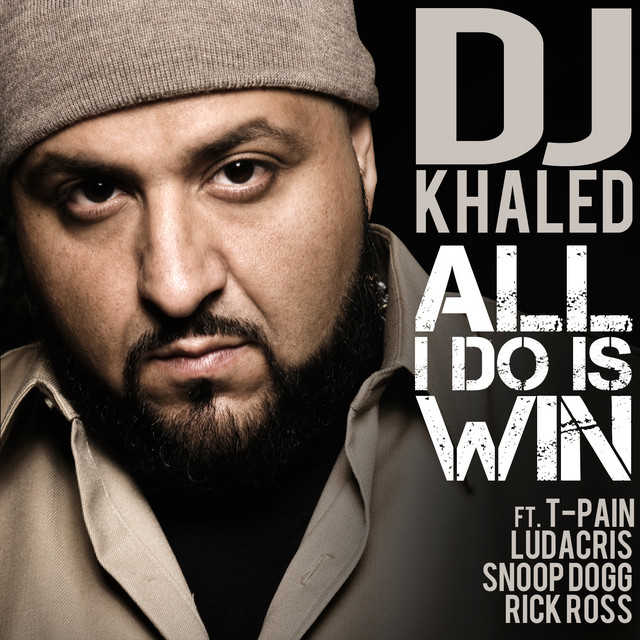
🎶 Song Of The Week - All I Do Is Win, DJ Khaled
All we do is win win no matter what! Keep showing up for each other.
Full playlist linked here.
Before you go!
Nice, you made it to the end. Thanks for reading@
We built something for you. The Claude Cheat Sheet for EAs is a free downloadable PDF with the exact prompts and workflows designed for how we actually work, travel planning, email drafts, meeting prep, exec briefs, all of it.
If you're not using AI in your workflow yet, this is your starting point. If you are, this will sharpen it.
It's free. Grab it below!