

My son is two now. And every so often I'll be talking to a new mom who just went back to work after having a baby, and the first thing I think isn't about the job or the juggle, it's how is she actually doing. Like, really doing. I remember exactly what that stretch felt like, and something in me just wants to reach through the conversation and tell her, I see you, this part is hard, you're not imagining it.

It's strange how clearly it comes back. Two years out and I can still feel the specific kind of tired that isn't really about sleep. I can still feel the pressure of walking back into a job that needed the same me who left, except I wasn't her anymore. Nobody warns you that the hardest part isn't the leave, it's the version of you that's supposed to show up after.
So when I talk to a new mom now, freshly back, still figuring out which parts of herself made the trip and which didn't, I don't just feel for her. I recognize her. And I think that recognition is worth putting into words this week, because most of us are carrying it alone when we don't have to be.
I want to talk about that gap. Not the leave itself, the return. What it costs to act unchanged when you are, very obviously, not.
The Job That Anticipates Everything, Except This
Here's the irony that took me a while to name. Our entire job is anticipating what someone else needs before they ask for it. We read the room, we read the calendar, we read the silence after a hard meeting and know to bring coffee instead of a question. We are professionally excellent at noticing what other people can't say out loud.
And then we come back from the most disorienting transition of our lives, and somehow nobody applies that same instinct to us.
Nearly 87% of executive assistants are women, and among Executive Assistants and admins specifically, that number climbs to 94%. This is an industry built almost entirely of women, run day to day by the exact people society expects to seamlessly absorb the second full-time job of new motherhood. You'd think an industry this female would have this figured out. It doesn't, because "figuring it out" was never anyone's job. It was just supposed to be ours, quietly, on our own time.
So we do what we always do…We manage it, we smooth it over, we anticipate our exec's needs on day one back, and we anticipate nobody anticipating ours.
Moda is the AI design agent with taste

Moda is an AI design product where you prompt what you need, get a complete on-brand design, and edit every element on a full canvas.
Our viral launch hit 4.4M views in days, tens of thousands signed up, and executives at major finance and tech companies now use it.
There Is No System, So We Built One Ourselves
The data on this is not subtle. More than a quarter of mothers either don't return to work after maternity leave, or leave within a year of coming back, and most point to poor support or a bad transition back as the reason. Of the ones who don't return at all, over half say it came down to bad parental leave or a bad transition back, specifically.
And the timing is the cruelest part. Research on mothers returning to work found the stress of it peaks the moment you walk back in, then eases slowly over the next six months. Which means the hardest, rawest stretch of the transition is exactly the window where everyone expects you to already be fine.
There is no formal system catching you here. Ninety percent of women in one survey said they weren't offered any kind of structured support coming back. So we build our own. A returning EA quietly negotiates her own slower start. She front-loads recovery into nights and weekends so the calendar never shows a crack. She learns which one work friend she can be honest with and performs "totally normal" for everyone else. That's not resilience, that's a workaround for a system that was never built.

I posted about this last week and the comments said everything I couldn't fit into one caption. Melanie Jones, founder of Elevation Chief of Staff Training, named the actual gap: everyone expects you to return, but no one acknowledges you're returning as a different person, and there's no honest conversation or grace built into that transition. Ashley Bottari talked about how often her son got sick that first year of daycare, and how close she came to quitting over how much time off it required, saved only by having a boss who happened to be understanding. Cassie Brozek left a 19-year career during her last pregnancy when it started affecting her health, thought that was it, and two years later is trying to find her way back on her own terms. None of these women had a system. Every one of them built her own way through.
And this isn't just an EA problem. It's bigger than our industry, it touches every working mother in every field, and it's one of those topics that quietly affects millions of women and almost never gets talked about out loud. We happen to be the ones who notice gaps for a living, so maybe it's on us to be the ones who name this one.
What Actually Helps (Because Someone Should Say It Plainly)
If you're heading back soon, or you're further out but still feel like you're performing a version of yourself:
Name the gap out loud, to one person. Not everyone, one person who can hold "I am not the same and I'm still good at my job" without treating it as a red flag.
Ask for a real slow start, not a symbolic one. A phased return isn't a perk, it's the difference between recovering in public or recovering in private on your own time. If your company doesn't offer one, write up your own plan for the first 30, 60, and 90 days and put it in front of your manager.
Let your first two weeks back be about relearning, not proving. You do not owe anyone a highlight reel in week one.
Watch for the "commitment" test. If someone questions your dedication because you're now a parent, that's data about them, not about you.
Stop mistaking the performance for the recovery. Looking unchanged and being okay are two different projects. Only one of them actually helps you.
If you run point for an exec who's coming back from leave, you can be the system that doesn't exist yet. Ask what a real slow start would look like before they ask you for one. That's the whole job, really. Anticipate the need before it's spoken, just, this once, anticipate it for the person next to you instead of above you.
We Take Care of Each Other

The most valuable thing an EA carries isn't on any resume. It's the mental rolodex, the restaurant that never fails for a board dinner, the private dining room that saved the offsite, the spot your exec asks for by name every time a VIP is in town.
That knowledge usually lives in one person's head and nowhere else. Most of us guard it like a state secret.
Not anymore. We're expanding the EA Restaurant Map, and we want your spots in it. Not influencer picks, not Google's top ten, the places you've actually used when it mattered. If this issue was about EAs finally showing up for each other, this is one small way to do it. Send us your recs.
Send us your recs:
City
Restaurant name
Why it's your go-to
🎶 Song Of The Week -
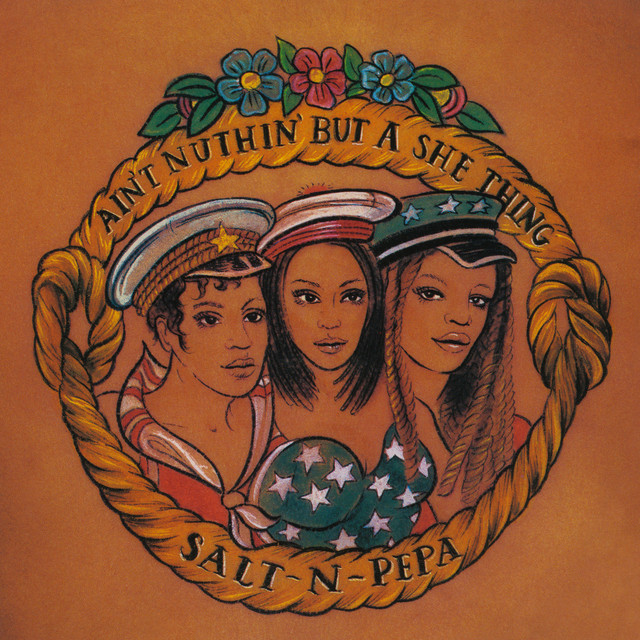
A defiant, chest-out anthem for anyone who's tired of shrinking the new version of themselves to fit the old expectations. "I could be anything that I want to be." Felt right for this issue.
Full playlist linked here.
👏 You made it to the end, here’s a thank you!
Nice, you made it to the end. Thanks for reading!

We built something for you. The Claude Cheat Sheet for EAs is a free downloadable PDF with the exact prompts and workflows designed for how we actually work, travel planning, email drafts, meeting prep, exec briefs, all of it.
If you're not using AI in your workflow yet, this is your starting point. If you are, this will sharpen it.
It's free. Grab it below!